Space Habitats

Arvind Singh
| 20-04-2026
 · Science Team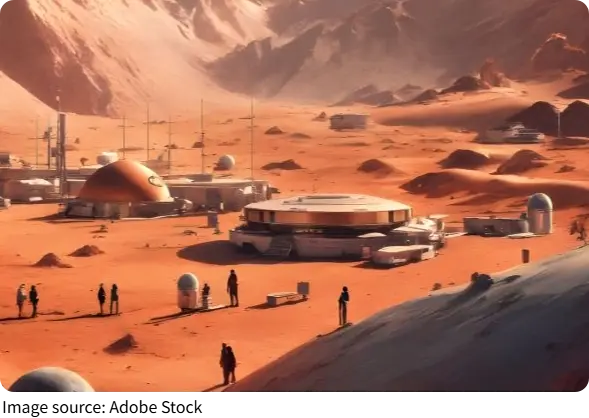
Introduction: A New Frontier for Humanity
As humanity reaches further into the cosmos, the concept of living on other planets is no longer confined to science fiction.
The Moon and Mars, once considered distant and inhospitable, are becoming potential sites for future space habitats. Advances in technology and space exploration have paved the way for the possibility of sustainable living environments beyond Earth. In this article, we'll explore what it will take to build space habitats on the Moon and Mars, and the technologies required to make them livable for humans.
The Moon: Our First Step to Space Colonization
The Moon is our nearest celestial neighbor, making it an ideal starting point for space colonization. With its relatively close proximity to Earth, the Moon provides an accessible testing ground for the technologies that will be essential for living on Mars and beyond. NASA's Artemis program aims to return humans to the Moon, with plans to establish a sustainable human presence by the late 2020s.
To create a space habitat on the Moon, there are several key challenges that need to be addressed. First, the lack of an atmosphere means there is no natural protection from harmful radiation, making shielding an essential consideration for any habitat. Additionally, the Moon experiences extreme temperature fluctuations, with daytime temperatures reaching 127°C (260°F) and nighttime temperatures dropping to -173°C (-280°F). These harsh conditions require advanced insulation and temperature regulation technologies.
Key technologies for Moon habitats:
1. Radiation shielding: Using materials like regolith (lunar soil) or water to block harmful radiation.
2. Thermal control systems: Innovative insulation and heat regulation to protect against extreme temperatures.
3. Life support systems: Recycling water, oxygen, and waste to support long-term habitation.
4. In-situ resource utilization (ISRU): Using lunar resources, like regolith, to create building materials and fuel for missions.
Mars: The Next Frontier
Mars, with its similarities to Earth, is the next logical target for human colonization. With a day length similar to Earth's, a manageable gravity environment, and the potential for water, Mars presents an exciting opportunity for creating a permanent human settlement. However, the challenges of living on Mars are much greater than those on the Moon.
The Martian atmosphere is mostly carbon dioxide, offering little protection from radiation and extreme temperatures, which can range from -125°C (-195°F) at night to 20°C (68°F) during the day. The planet's lower gravity (about 38% of Earth's) could have unknown effects on human health, requiring innovations in medical technologies and habitat design.
Key technologies for Mars habitats:
1. Atmosphere creation: Developing technologies to convert the Martian atmosphere into a breathable one or creating controlled, sealed habitats.
2. Hydroponic farming: Growing food in controlled environments without soil to ensure food security.
3. Advanced life support systems: Managing air, water, and waste in a closed-loop system to ensure long-term sustainability.
4. Terraforming technologies: Long-term plans to alter the Martian environment, potentially by releasing greenhouse gases to warm the planet.
Building Sustainable Habitats: In-Situ Resource Utilization (ISRU)
A major breakthrough in both Moon and Mars colonization is the concept of in-situ resource utilization (ISRU). Instead of relying on Earth for all supplies, ISRU allows astronauts to use the resources available on the Moon or Mars to create fuel, water, and building materials.
On the Moon, regolith can be converted into building materials using 3D printing, and water ice found at the lunar poles can be extracted for drinking and producing oxygen. On Mars, extracting carbon dioxide from the atmosphere and converting it into oxygen and methane could provide breathable air and rocket fuel. These technologies not only reduce the cost of transporting supplies from Earth but also make long-term habitation more feasible.
Key ISRU technologies:
1. Water extraction: Mining ice for water to support life and create oxygen.
2. Oxygen production: Using carbon dioxide from Mars or the Moon to produce breathable oxygen.
3. 3D printing with local materials: Printing structures and tools using resources like regolith or Martian soil.
4. Fuel production: Converting local resources into fuel for spacecraft and vehicles.
The Challenges of Human Health in Space
Living in space for extended periods poses numerous health challenges. On the Moon and Mars, astronauts will face the effects of low gravity, radiation exposure, and isolation. The long-term effects of low gravity on human bones, muscles, and cardiovascular health are still not fully understood, and this presents a significant challenge for long-term habitation.
Radiation is another significant concern. Without the protective atmosphere of Earth, astronauts are exposed to harmful cosmic rays and solar radiation, which can increase the risk of cancer and other health issues. Effective shielding and radiation monitoring systems will be essential to protect human health.

Conclusion: A Bold Step Toward the Future
Space habitats on the Moon and Mars are no longer just a dream. As technology continues to advance, we are getting closer to making permanent space settlements a reality. However, building sustainable living environments on these planets requires overcoming significant challenges in radiation protection, resource management, and human health. The technologies developed for Moon and Mars habitats will not only enable space exploration but could also lead to innovations that benefit life here on Earth. With continued investment and innovation, humanity could one day call another planet home.