Secrets of the Red Deer

Arvind Singh
| 05-03-2026
 · Animal Team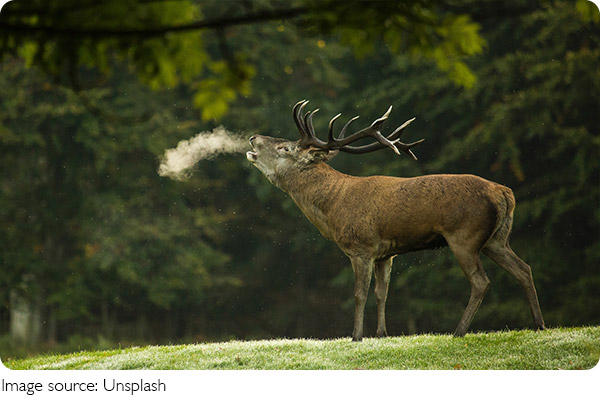
On a misty morning in the highlands, a deep, resonant roar cuts through the quiet.
A stag lifts its head, antlers silhouetted against the rising sun, commanding attention across the valley.
The red deer, one of the most iconic European mammals, blends strength, social intelligence, and subtle survival skills in ways that often go unnoticed. Observing these majestic creatures can feel like peering into a living tapestry of forest life.
Their behavior is not only visually captivating but also reveals fascinating adaptations that allow them to flourish in diverse environments. From communication to mating strategies, each aspect is a window into their intricate social and ecological world.
Communication and Social Signals
1. Roaring during rut
During the mating season, stags emit deep, guttural roars to assert dominance and attract females. These vocalizations carry over long distances, signaling strength without immediate confrontation. Roaring also helps stags gauge rivals' size and condition before deciding whether to engage.
2. Visual signals
Antler size and posture serve as visual cues in contests and courtship displays. Larger antlers indicate maturity and genetic fitness, reducing unnecessary fights by signaling dominance. Similarly, body posture, raised fur, and tail flicks communicate intentions to other herd members.
3. Scent marking
Red deer use glands on their legs and head to deposit scents on vegetation. These chemical messages convey reproductive status, territorial boundaries, and individual identity, allowing herds to coordinate and avoid conflicts while navigating shared habitats.
Mating and Reproduction
1. Rutting behavior
During the rut, stags compete for harems of females through a combination of displays, roars, and occasional sparring. The season is brief but intense, and the outcomes influence herd genetics for years to come.
2. Courtship rituals
Males often perform slow, deliberate approaches, circling females while showcasing their antlers. Successful courtship involves both stamina and strategic decision-making, ensuring that only the fittest individuals reproduce.
3. Maternal care
Females give birth in secluded areas, often in dense vegetation, to protect calves from predators. For the first months, calves rely on their mothers' vigilance and milk while gradually learning foraging skills essential for survival.
Adaptations for Survival
1. Seasonal coat changes
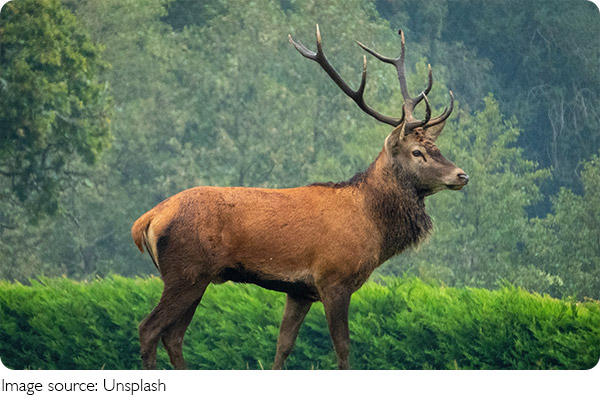
Red deer grow a thick, reddish-brown coat in winter that provides insulation and camouflage against the muted forest tones. In summer, a shorter, lighter coat helps regulate temperature while blending with the sunlit landscape.
2. Agile movement
Strong legs and flexible joints enable red deer to traverse rugged terrain, leap over obstacles, and escape predators. Herd members coordinate movement, often following older, experienced individuals who know safe paths and feeding areas.
3. Foraging versatility
Red deer are opportunistic feeders, grazing on grasses, leaves and shoots in summer, and shifting to stemmy plants and bark in winter. This dietary flexibility allows them to occupy a variety of habitats, from moorlands to dense forests.
Watching red deer in their natural environment is a lesson in subtlety and strength. Every roar, movement, and interaction reflects a lifetime of adaptation to forest life. Their communication methods, mating strategies, and seasonal behaviors reveal not just survival but an elegant orchestration of social and ecological intelligence.
Next time you find yourself in deer country, pause and listen for the echo of a distant roar. Beyond its power and majesty lies a story of resilience, strategy, and the quiet brilliance of life in the wild.